
The terminology
| Term | Meaning | Selection implication |
|---|---|---|
| AMR | Autonomous mobile robot | Emphasizes perception and navigation within approved areas. |
| AGV | Automated guided vehicle | The individual vehicle; often called FTF in German. |
| FTF | Fahrerloses Transportfahrzeug | German term for a driverless transport vehicle. |
| FTS | Fahrerloses Transportsystem | The complete system, including vehicles, control, infrastructure and operating arrangements. |
Product labels overlap. Modern AGVs can also use sensor-based navigation. “AGVs always follow a line; AMRs can drive anywhere” is not a dependable procurement rule.
Vehicle functions versus fleet coordination
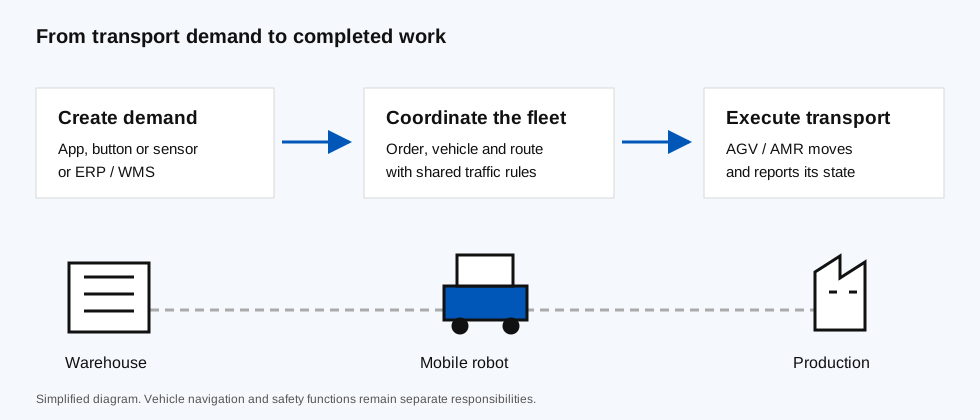
The vehicle executes motion and handling and has its own safety functions. Fleet software decides which suitable vehicle should perform the work and how shared routes and resources are coordinated.
A supervisory platform does not automatically replace navigation or safety-related vehicle control. Interfaces and responsibility boundaries must be agreed in the project.
Common vehicle classes
- Underride robots: move suitable carts or structures; the mechanical interface matters.
- Pallet movers: transport pallets between defined positions; load carriers and pickup heights must match.
- Autonomous forklifts: combine transport and lifting; load centre, lift height and handover precision influence selection.
- Tuggers: pull trailers or trains; the route must accommodate the whole train.
- Small-load robots: carry bins, parts or materials in suitable environments.
Start with the material flow
Define what moves, from where to where, what creates the demand and how the load is handed over. Then choose vehicle and software. A robot model alone does not create a working automation process.
Document load carriers, peak throughput, floors, doors, mixed traffic, shifts and disruptions. Test the critical flow at the actual site. Review typical use cases.
Sources and context
Base review: 18 September 2026. Manufacturer information is not an independent comparative test.